


RUGBY BOOT BUYERS GUIDE
What will you get from this guide?
The right boots don’t just support your game — they elevate it. From explosive pace to rock-solid traction, every player has different demands. In this guide, we’ll help you choose the perfect pair based on your position, budget, playing surface, and stud setup, so you can step onto the pitch ready to perform.
Let’s start with ground type and stud pattern…
In a hurry? Here’s what you need to know…
From soft ground to mixed studs, Rugbystore has you covered with our complete guide to rugby boot ground types. With so many factors to consider, this guide makes it easy to find the perfect boots — whether it’s for you or a rugby-loving child. Make sure every step on the pitch counts!
| Feature | Primary Surface | Stud Type | Mud Performance | Artificial Turf | Versatility |
| Soft Ground (SG) | Wet, muddy natural grass | Longer metal screw-in studs (usually replaceable) | Excellent | Not suitable | Low – specialised for soft ground |
| Firm Ground (FG) | Dry or slightly damp natural grass | Short, molded plastic studs | Limited | Not recommended | Moderate – best on firm grass |
| Mixed Studs | Variable natural grass (firm + soft patches) | Combination of stud lengths; sometimes plastic + metal | Good (light/moderate mud) | Not recommended | Moderate – adaptable on grass |
| All Ground (AG) | Multiple surfaces (natural grass + artificial turf) | Many short, evenly distributed plastic studs | Limited | Designed for artificial turf (3G/4G) | High – suited to different pitch types |

SOFT GROUND BOOTS
When you think of rugby, you think of rain, mud, and soaked pitches — conditions where traction can become a real challenge. This is where Soft Ground (SG) boots come in. Designed specifically for wet and heavy conditions, these boots are the ideal choice for winter rugby.
Soft Ground boots typically feature 6–8 metal-tipped studs that penetrate soft surfaces to provide maximum grip. These studs are longer than those on firm ground boots and are usually screw-in, allowing them to be replaced when worn or swapped for shorter studs on firmer ground.
The primary purpose of SG boots is to enhance traction, helping prevent slipping on muddy surfaces and providing better stability during acceleration, cutting, and tackling. With the right pair, players can stay confident and in control, no matter how challenging the pitch gets.
-
Best for wet, muddy, soft natural grass
-
Fewer, longer studs (usually metal, often replaceable)
-
Studs dig deep for maximum grip
-
Excellent traction in mud and slippery conditions
-
Less comfortable on firm surfaces
-
Not suitable for artificial turf or hard ground
SOFT GROUND BOOTS
When you think of rugby, you think of rain, mud, and soaked pitches — conditions where traction can become a real challenge. This is where Soft Ground (SG) boots come in. Designed specifically for wet and heavy conditions, these boots are the ideal choice for winter rugby.
Soft Ground boots typically feature 6–8 metal-tipped studs that penetrate soft surfaces to provide maximum grip. These studs are longer than those on firm ground boots and are usually screw-in, allowing them to be replaced when worn or swapped for shorter studs on firmer ground.
The primary purpose of SG boots is to enhance traction, helping prevent slipping on muddy surfaces and providing better stability during acceleration, cutting, and tackling. With the right pair, players can stay confident and in control, no matter how challenging the pitch gets.
-
Best for wet, muddy, soft natural grass
-
Fewer, longer studs (usually metal, often replaceable)
-
Studs dig deep for maximum grip
-
Excellent traction in mud and slippery conditions
-
Less comfortable on firm surfaces
-
Not suitable for artificial turf or hard ground
Firm Ground Boots
Firm Ground boots are designed for dry or slightly damp natural grass pitches. They usually feature 10–12 moulded studs made from plastic or TPU, providing stable traction without penetrating too deeply into the surface.
The studs are fixed and carefully positioned to distribute pressure evenly, giving players balance, support, and confidence when accelerating, cutting, or tackling. FG boots are ideal for most standard pitch conditions and are the most commonly used boot type in rugby.
-
Best for dry or slightly damp natural grass
-
Short, molded plastic studs
-
Typically 10–14 studs evenly distributed
-
Fixed studs (not replaceable)
-
Provide balanced traction and stability
-
Comfortable due to even pressure distribution
-
Most common and widely used
-
Not suitable for deep mud or artificial turf

Firm Ground Boots
Firm Ground boots are designed for dry or slightly damp natural grass pitches. They usually feature 10–12 moulded studs made from plastic or TPU, providing stable traction without penetrating too deeply into the surface.
The studs are fixed and carefully positioned to distribute pressure evenly, giving players balance, support, and confidence when accelerating, cutting, or tackling. FG boots are ideal for most standard pitch conditions and are the most commonly used boot type in rugby.
-
Best for dry or slightly damp natural grass
-
Short, molded plastic studs
-
Typically 10–14 studs evenly distributed
-
Fixed studs (not replaceable)
-
Provide balanced traction and stability
-
Comfortable due to even pressure distribution
-
Most common and widely used
-
Not suitable for deep mud or artificial turf
MIXED STUD BOOTS
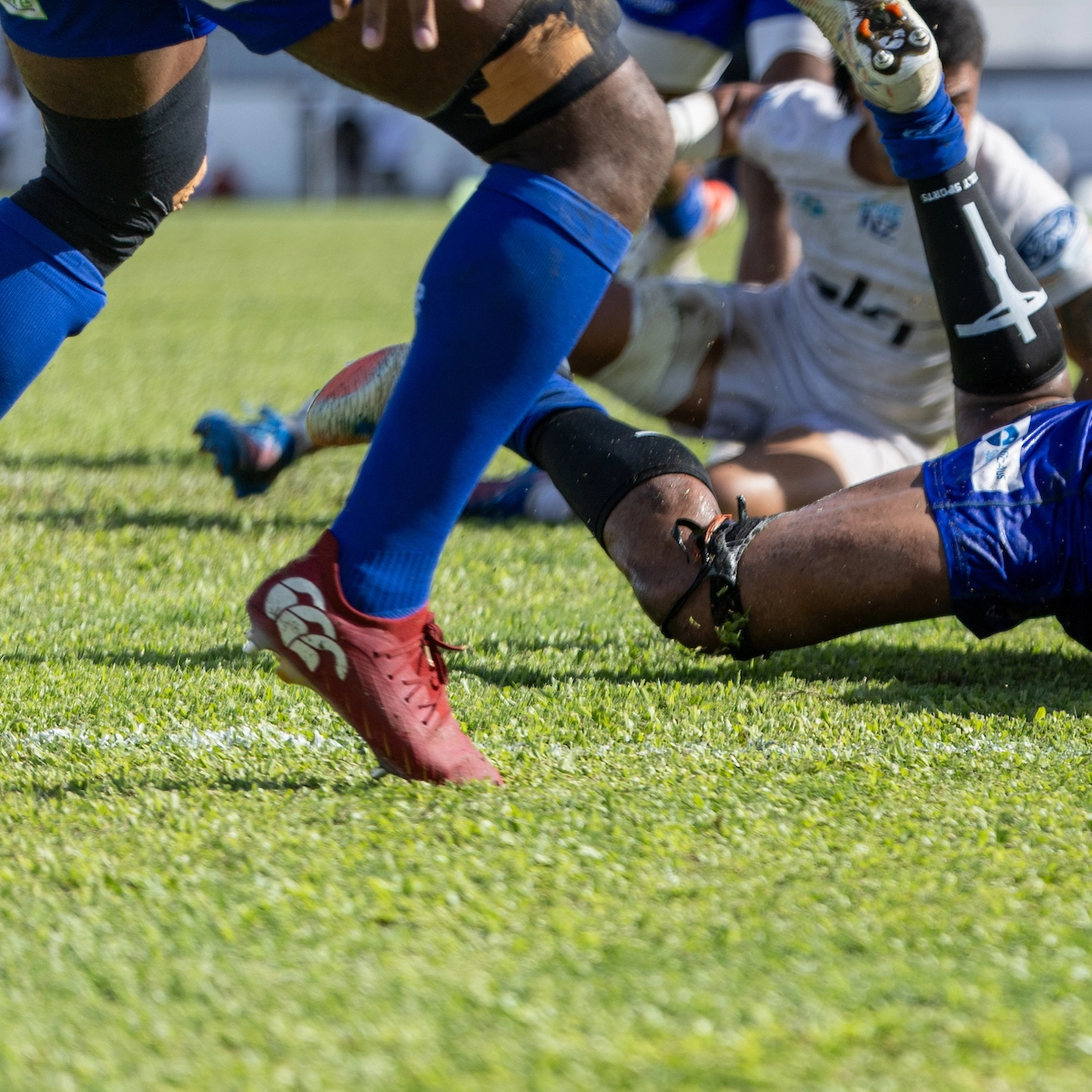
Mixed Stud boots are designed for players who need maximum versatility on varying pitch conditions. Combining both metal and plastic studs, these boots provide the grip of soft ground boots with the stability of firm ground boots.
The configuration typically includes longer screw-in studs for penetrating soft or muddy patches, paired with shorter moulded studs for traction on firmer areas. This makes Mixed Stud boots ideal for unpredictable surfaces, offering reliable performance in winter, during wet matches, or on pitches that are partially firm and partially soft.
With enhanced grip and stability, Mixed Stud boots allow players to accelerate, cut, and tackle confidently, no matter how the pitch changes throughout the game.
-
Best for natural grass with mixed firm and soft patches
-
Combination of stud lengths; sometimes plastic + metal
-
Provides moderate grip in light/moderate mud
-
Adaptable to variable grass conditions
-
Not recommended for artificial turf or extreme soft/muddy ground
MIXED STUD BOOTS
Mixed Stud boots are designed for players who need maximum versatility on varying pitch conditions. Combining both metal and plastic studs, these boots provide the grip of soft ground boots with the stability of firm ground boots.
The configuration typically includes longer screw-in studs for penetrating soft or muddy patches, paired with shorter moulded studs for traction on firmer areas. This makes Mixed Stud boots ideal for unpredictable surfaces, offering reliable performance in winter, during wet matches, or on pitches that are partially firm and partially soft.
With enhanced grip and stability, Mixed Stud boots allow players to accelerate, cut, and tackle confidently, no matter how the pitch changes throughout the game.
-
Best for natural grass with mixed firm and soft patches
-
Combination of stud lengths; sometimes plastic + metal
-
Provides moderate grip in light/moderate mud
-
Adaptable to variable grass conditions
-
Not recommended for artificial turf or extreme soft/muddy ground
ALL GROUND BOOTS
All Ground boots offer versatility for players who encounter a mix of surfaces, from dry natural grass to artificial turf. AG boots typically feature a combination of shorter moulded studs and strategic stud patterns to provide reliable grip across multiple conditions.
This configuration allows players to maintain traction, stability, and agility on both firm and softer surfaces without needing to change boots between pitches. AG boots are perfect for training sessions, youth rugby, or situations where the playing surface can vary.
-
Best for multiple surfaces (natural grass + artificial turf)
-
Many short, evenly distributed plastic studs
-
Good traction on firm grass and artificial turf
-
Highly versatile
-
Limited grip in deep mud
-
Ideal for players who play on varying surfaces
ALL GROUND BOOTS
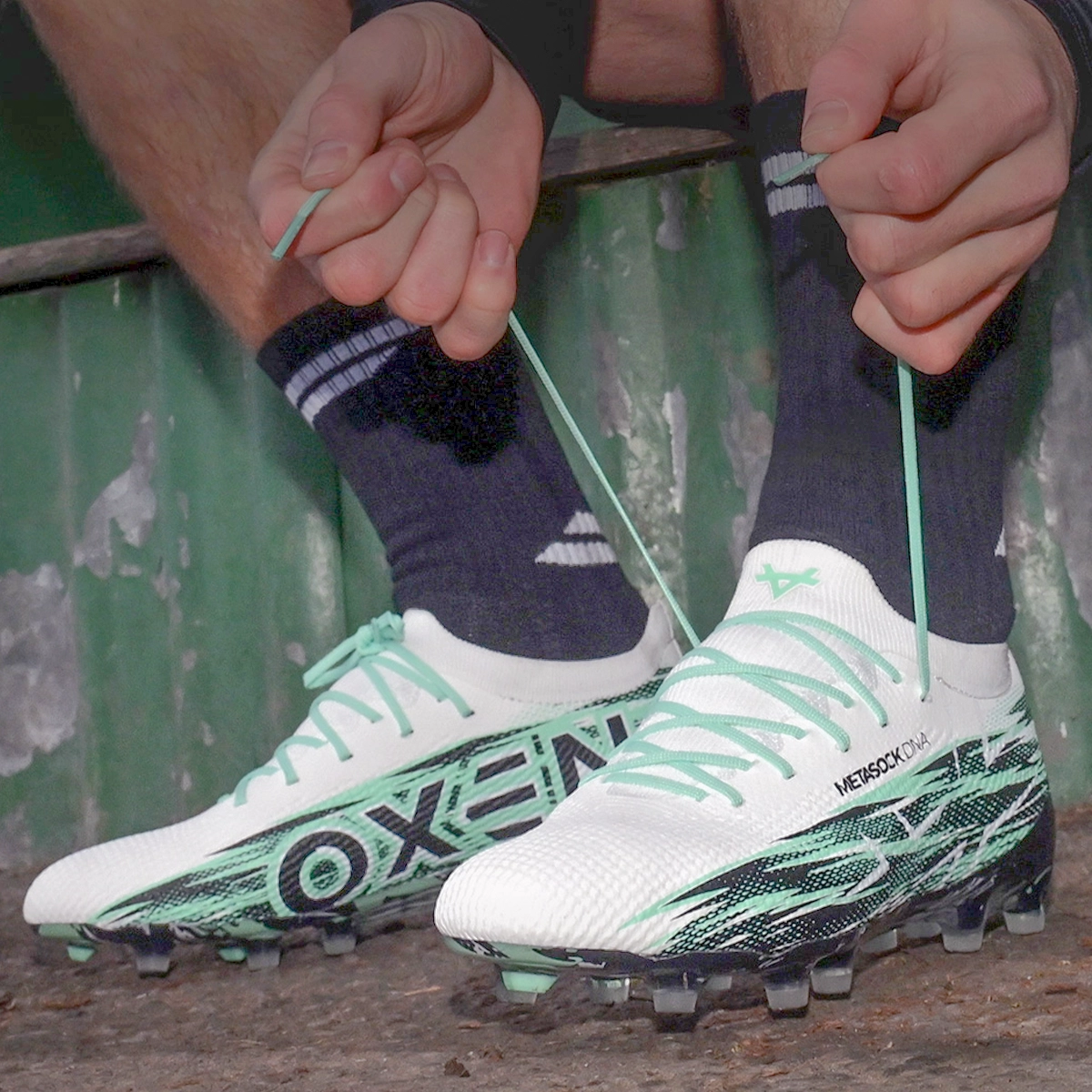
All Ground boots offer versatility for players who encounter a mix of surfaces, from dry natural grass to artificial turf. AG boots typically feature a combination of shorter moulded studs and strategic stud patterns to provide reliable grip across multiple conditions.
This configuration allows players to maintain traction, stability, and agility on both firm and softer surfaces without needing to change boots between pitches. AG boots are perfect for training sessions, youth rugby, or situations where the playing surface can vary.
-
Designed for multiple surfaces (natural grass + artificial turf)
-
Many short, evenly distributed plastic studs
-
Good traction on firm grass and artificial turf
-
Highly versatile
-
Limited grip in deep mud
-
Ideal for players who play on varying surfaces
BOOTS BY POSITION
You might know your stud type, but the next question is which boot suits your position. While there are great options for beginners — like Mizuno’s Monarcida range — many players need boots tailored to their game.
Whether you’re looking to glide past defenders or gain extra grip in the ruck, explore our dedicated sections for backs and forwards to find the perfect pair for your position.
| Feature | Primary Focus | Stud Configuration | Weight | Material Build | Position |
| Backs Boots | Speed, agility, and acceleration | 6 or mixed studs (balance of grip & mobility) | Lightweight for faster movement | Thin, flexible, “second-skin” feel | Scrum-halves, Fly-halves, Centres, Wings, Fullbacks |
| Forwards Boots | Power, stability, and grip | 8 metal studs (maximum traction) | Heavier for durability | Thick, reinforced for contact | Props, Hookers, Locks, Back Row |
BACKS BOOTS
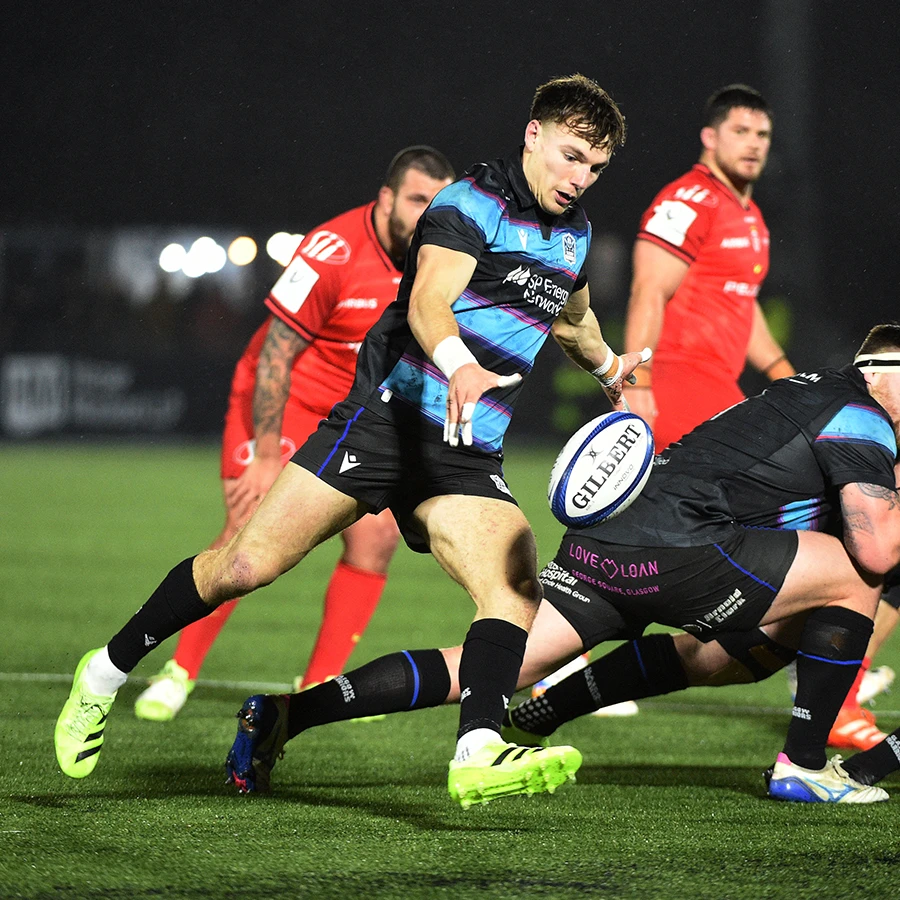
Backs thrive on speed, quick direction changes, and explosive acceleration. Their boots are engineered to be lightweight and responsive, allowing players to move freely and react instantly during open play.
Unlike forwards, backs typically wear boots with a 6-stud or mixed stud configuration, offering a balance between grip and mobility. This setup allows for quick pivots and rapid acceleration without feeling weighed down.
The construction of backs boots focuses on lightweight materials and a snug fit, almost like a second skin. This enhances ball feel when kicking and passing, which is essential for positions like fly-half and fullback.
Flexibility is key—backs need boots that move with them, not against them. As a result, these boots are often lower cut and less bulky, prioritizing speed over protection.
- 6 or mixed stud configuration for agility
- Lightweight design for speed
- Flexible and responsive materials
- Close fit for improved ball control
BACKS BOOTS
Backs thrive on speed, quick direction changes, and explosive acceleration. Their boots are engineered to be lightweight and responsive, allowing players to move freely and react instantly during open play.
Unlike forwards, backs typically wear boots with a 6-stud or mixed stud configuration, offering a balance between grip and mobility. This setup allows for quick pivots and rapid acceleration without feeling weighed down.
The construction of backs boots focuses on lightweight materials and a snug fit, almost like a second skin. This enhances ball feel when kicking and passing, which is essential for positions like fly-half and fullback.
Flexibility is key—backs need boots that move with them, not against them. As a result, these boots are often lower cut and less bulky, prioritizing speed over protection.
- 6 or mixed stud configuration for agility
- Lightweight design for speed
- Flexible and responsive materials
- Close fit for improved ball control
FORWARDS BOOTS
Forwards are the engine room of a rugby team, responsible for scrums, rucks, mauls, and close-contact play. Their boots are designed with strength, grip, and durability in mind to handle the intense physical demands of the position.
One of the standout features of forward boots is the 8-stud configuration. This provides maximum traction, especially in muddy or soft ground conditions, helping players maintain stability during scrums and heavy collisions. The added grip is crucial for generating power and preventing slips at key moments.
Support is another major focus. Forward boots typically have a higher cut around the ankle and a reinforced upper, offering protection and reducing the risk of injury during physical engagements. They’re also generally heavier and more robust, built to withstand constant pressure and contact.
Comfort hasn’t been overlooked either—modern designs balance toughness with cushioning, ensuring players can perform for the full 80 minutes without discomfort.
- 8 metal studs for superior grip
- Strong, reinforced materials for durability
- Enhanced ankle support
- Designed for scrummaging and physical play
FORWARDS BOOTS
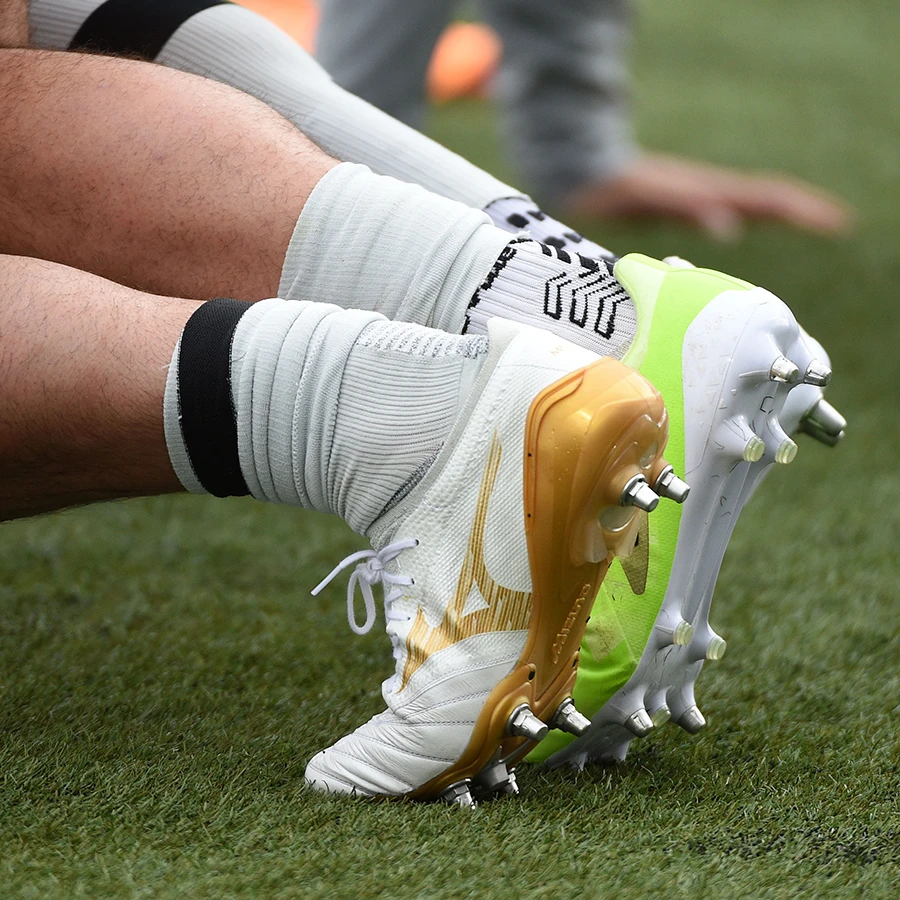
Forwards are the engine room of a rugby team, responsible for scrums, rucks, mauls, and close-contact play. Their boots are designed with strength, grip, and durability in mind to handle the intense physical demands of the position.
One of the standout features of forward boots is the 8-stud configuration. This provides maximum traction, especially in muddy or soft ground conditions, helping players maintain stability during scrums and heavy collisions. The added grip is crucial for generating power and preventing slips at key moments.
Support is another major focus. Forward boots typically have a higher cut around the ankle and a reinforced upper, offering protection and reducing the risk of injury during physical engagements. They’re also generally heavier and more robust, built to withstand constant pressure and contact.
Comfort hasn’t been overlooked either—modern designs balance toughness with cushioning, ensuring players can perform for the full 80 minutes without discomfort.
- 8 metal studs for superior grip
- Strong, reinforced materials for durability
- Enhanced ankle support
- Designed for scrummaging and physical play
BOOTS BY LEVEL
Another key factor when choosing rugby boots is the level you play at. Most boots fall into three categories: Club, Advanced, and Elite — each offering different features to suit your performance needs.
From your playing level to your budget, understanding these tiers will help you find the right boot for your game.
| Feature | Materials | Weight | Performance Tech | Comfort & Fit | Price Range |
| Elite Level Boots | Premium (ultra-thin synthetics, top leather) | Very lightweight for speed & agility | Cutting-edge (precision fit, traction systems) | Highly refined, close “second-skin” fit | Expensive (top-tier pricing) |
| Advanced Level Boots | Mid-range (good quality synthetics/leather) | Moderately lightweight | Some advanced features, but simplified | Comfortable with decent fit | Mid-range |
| Club Level Boots | Basic, thicker, more durable materials | Heavier, less focused on speed | Minimal technology, basic functionality | Roomier, less tailored fit | Budget-friendly |
ELITE BOOTS
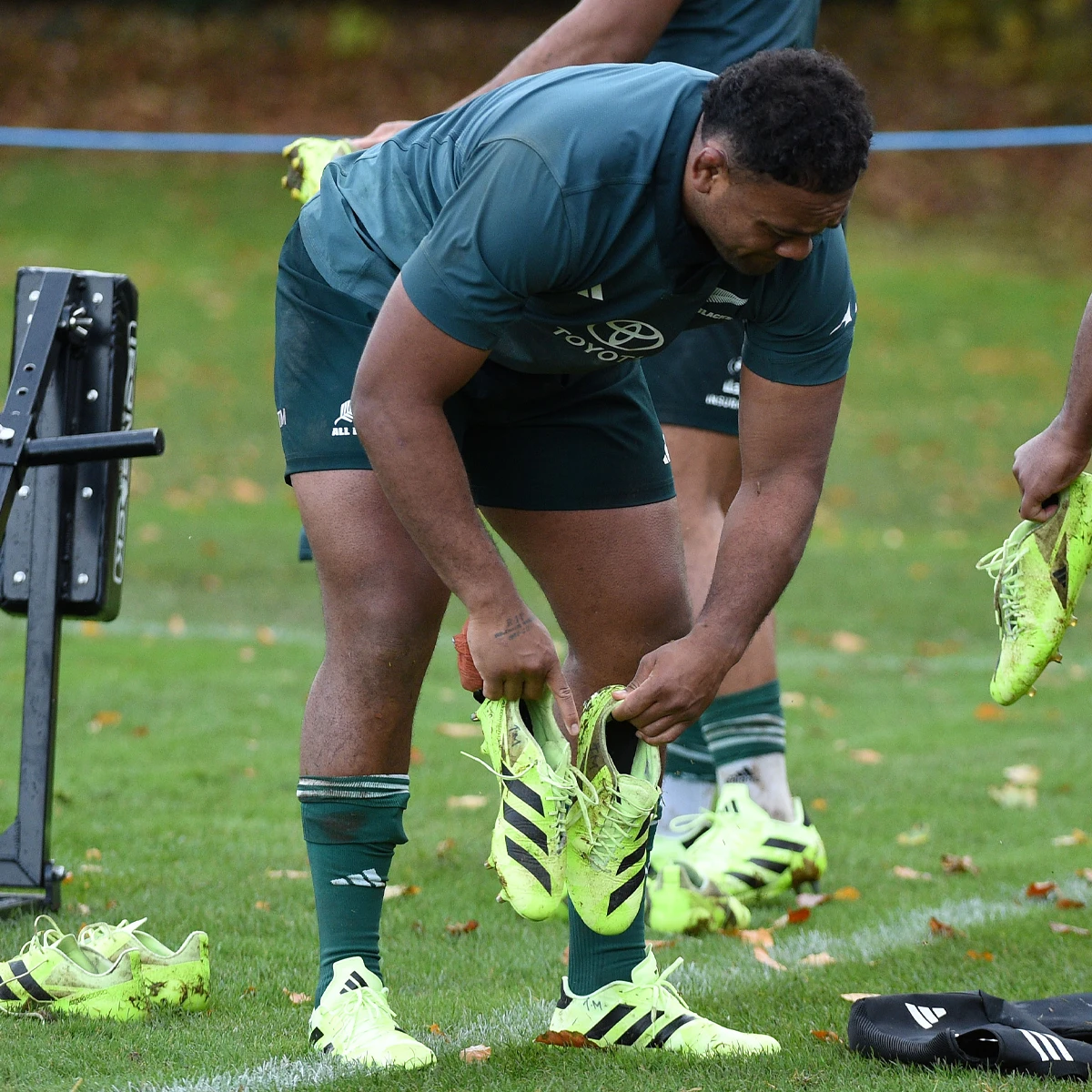
Elite level boots are designed with the needs of professional or highly competitive players in mind, where even the smallest performance advantages can make a meaningful difference. At this level, every detail is carefully considered, from the choice of materials to the overall construction of the boot. They typically use premium materials such as ultra-thin synthetic uppers or high-grade leather, both of which are selected to provide a close, responsive fit that feels almost like a second skin. This snug fit enhances touch and control on the ball, allowing players to execute precise movements at high speed.
In addition to material quality, elite boots are engineered to be as lightweight as possible without compromising durability or structural integrity. This reduction in weight helps improve agility and reduces fatigue over the course of a match. You’ll often find advanced stud configurations that are specifically designed for different playing surfaces or even tailored to certain positions, optimizing grip and stability during quick changes of direction. Many models also incorporate innovative technologies aimed at enhancing acceleration, traction, and ball control, particularly when operating at top speed. Altogether, elite boots represent the cutting edge of performance footwear, built to support players who demand the highest level of responsiveness, comfort, and efficiency on the pitch.
- Made with premium materials (ultra-thin synthetics or high-grade leather)
- Extremely lightweight for maximum speed and agility
- Advanced stud configurations tailored to position and pitch type
- “Second-skin” fit for precise control and responsiveness
- Incorporates cutting-edge performance technology
- Highest price point, aimed at professional or top-level players
ELITE BOOTS
Elite level boots are designed with the needs of professional or highly competitive players in mind, where even the smallest performance advantages can make a meaningful difference. At this level, every detail is carefully considered, from the choice of materials to the overall construction of the boot. They typically use premium materials such as ultra-thin synthetic uppers or high-grade leather, both of which are selected to provide a close, responsive fit that feels almost like a second skin. This snug fit enhances touch and control on the ball, allowing players to execute precise movements at high speed.
In addition to material quality, elite boots are engineered to be as lightweight as possible without compromising durability or structural integrity. This reduction in weight helps improve agility and reduces fatigue over the course of a match. You’ll often find advanced stud configurations that are specifically designed for different playing surfaces or even tailored to certain positions, optimizing grip and stability during quick changes of direction. Many models also incorporate innovative technologies aimed at enhancing acceleration, traction, and ball control, particularly when operating at top speed. Altogether, elite boots represent the cutting edge of performance footwear, built to support players who demand the highest level of responsiveness, comfort, and efficiency on the pitch.
- Made with premium materials (ultra-thin synthetics or high-grade leather)
- Extremely lightweight for maximum speed and agility
- Advanced stud configurations tailored to position and pitch type
- “Second-skin” fit for precise control and responsiveness
- Incorporates cutting-edge performance technology
- Highest price point, aimed at professional or top-level players
ADVANCED BOOTS
Advanced level boots sit just below the top tier and are designed for serious amateur or semi-professional players who still demand a high level of performance from their footwear. While they may not feature every cutting-edge innovation found in elite models, they often incorporate many of the same core technologies, such as ergonomic shaping for a more natural fit and improved traction systems that enhance stability and movement on the pitch. This means players can still benefit from a responsive feel and reliable grip during fast-paced play.
To maintain a more accessible price point, advanced boots typically use slightly less expensive materials or opt for a more streamlined construction process. For example, instead of the most premium ultra-thin synthetics or top-grade leather, they might use durable synthetic blends or treated leather that still provide a comfortable and consistent touch on the ball. Despite these small compromises, they continue to deliver strong overall performance, offering a solid balance of comfort, durability, and control.
In practical terms, this level of boot is often only marginally heavier or less finely tuned than elite options, differences that many players may not even notice during regular play. For most competitive athletes, advanced boots represent a sweet spot—providing many of the benefits associated with high-end designs while remaining more affordable and accessible, making them a popular and sensible choice for those who want quality without paying premium prices.
- Good-quality materials, slightly less premium than elite
- Moderately lightweight, balancing speed and durability
- Improved stud patterns, though less specialized than elite
- Comfortable fit with some ergonomic design features
- Includes selected performance technologies from elite range
- Mid-range pricing, suited for serious amateur players
ADVANCED BOOTS
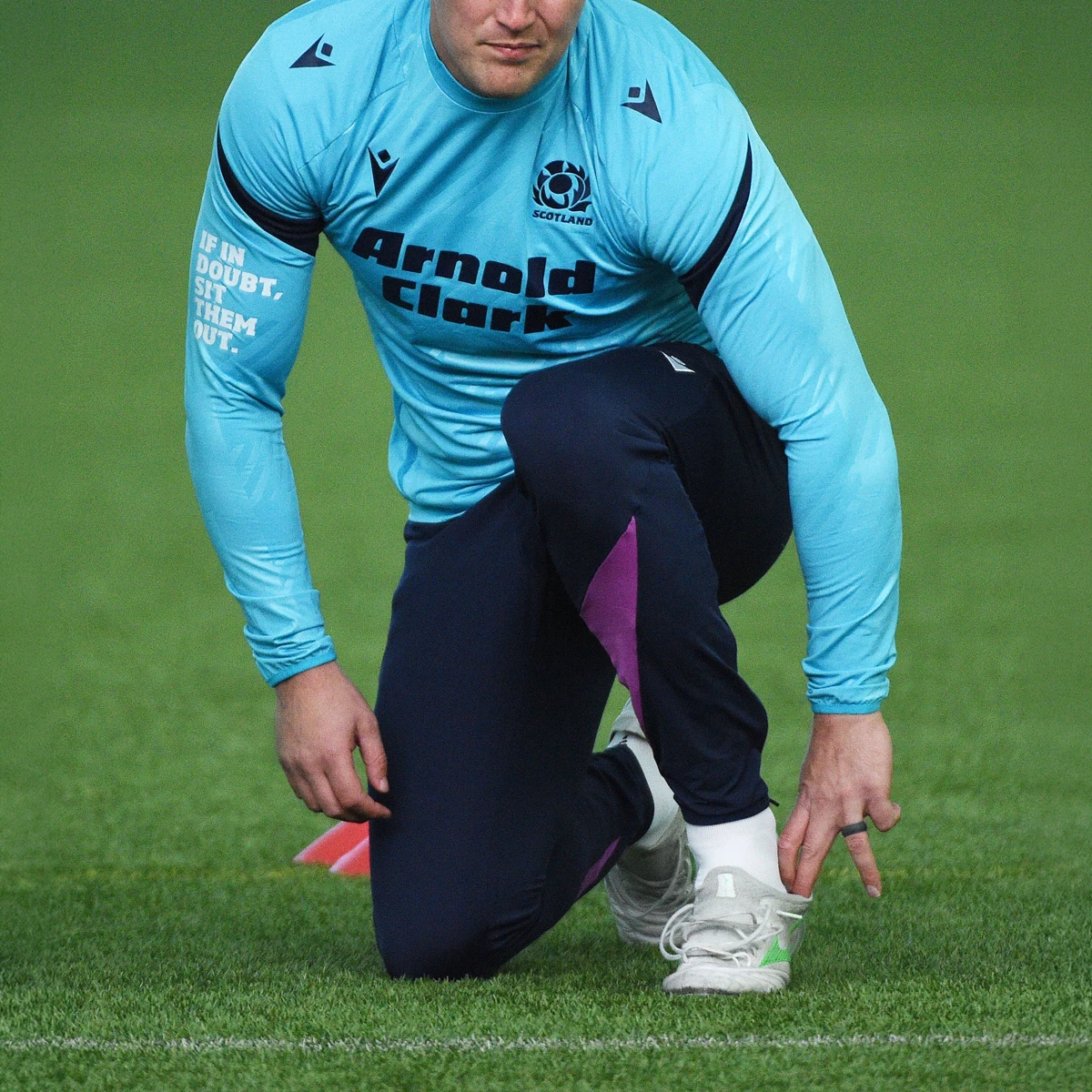
Advanced level boots sit just below the top tier and are designed for serious amateur or semi-professional players who still demand a high level of performance from their footwear. While they may not feature every cutting-edge innovation found in elite models, they often incorporate many of the same core technologies, such as ergonomic shaping for a more natural fit and improved traction systems that enhance stability and movement on the pitch. This means players can still benefit from a responsive feel and reliable grip during fast-paced play.
To maintain a more accessible price point, advanced boots typically use slightly less expensive materials or opt for a more streamlined construction process. For example, instead of the most premium ultra-thin synthetics or top-grade leather, they might use durable synthetic blends or treated leather that still provide a comfortable and consistent touch on the ball. Despite these small compromises, they continue to deliver strong overall performance, offering a solid balance of comfort, durability, and control.
In practical terms, this level of boot is often only marginally heavier or less finely tuned than elite options, differences that many players may not even notice during regular play. For most competitive athletes, advanced boots represent a sweet spot—providing many of the benefits associated with high-end designs while remaining more affordable and accessible, making them a popular and sensible choice for those who want quality without paying premium prices.
- Good-quality materials, slightly less premium than elite
- Moderately lightweight, balancing speed and durability
- Improved stud patterns, though less specialized than elite
- Comfortable fit with some ergonomic design features
- Includes selected performance technologies from elite range
- Mid-range pricing, suited for serious amateur players
CLUB BOOTS
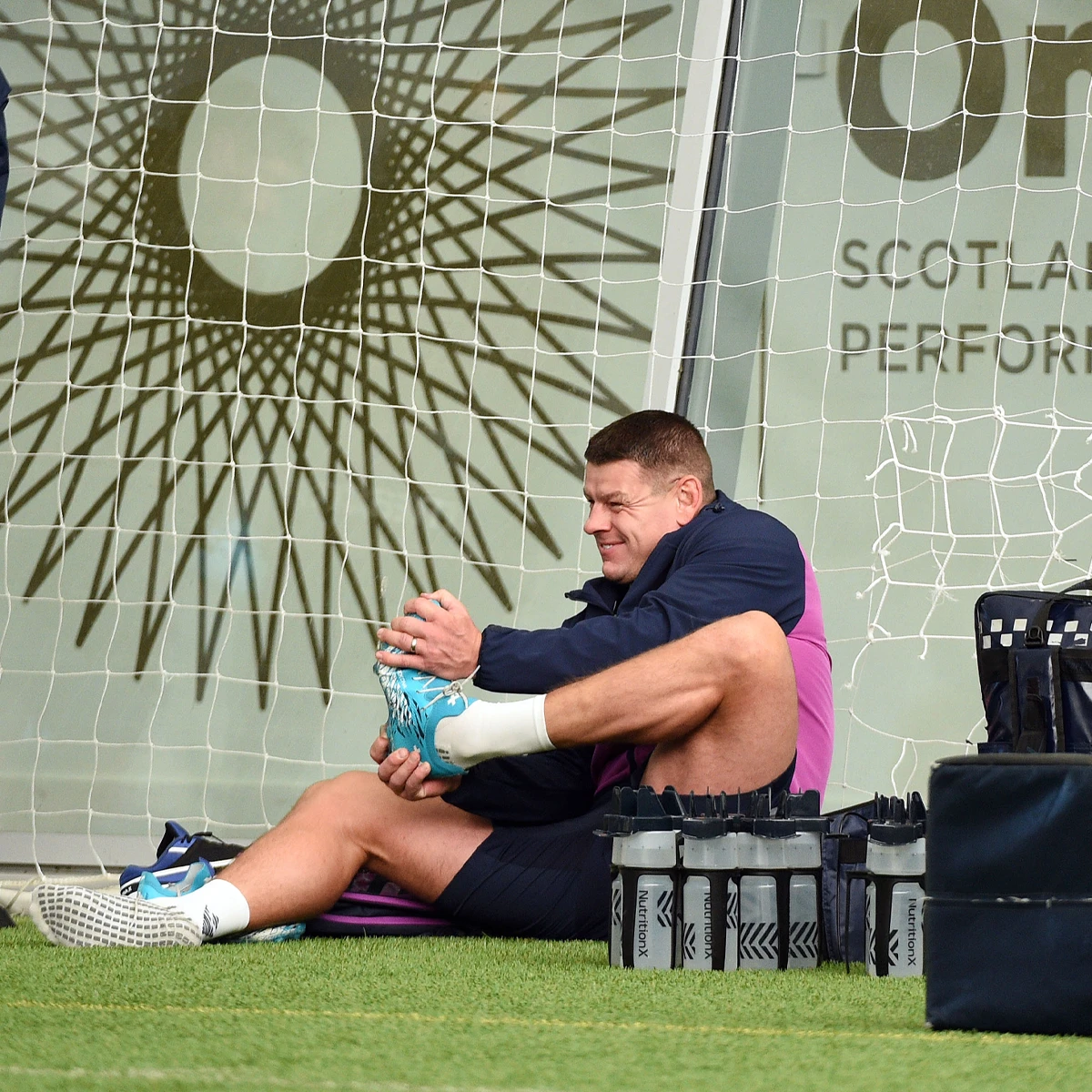
Club level boots are the entry-level option, designed primarily for beginners, casual players, or those who play less frequently and don’t require top-tier performance features. At this level, the emphasis is placed firmly on durability, comfort, and overall value rather than cutting-edge innovation. These boots are built to withstand regular use on a variety of surfaces, making them a practical choice for players who are still developing their skills or simply enjoying the game in a more relaxed setting.
The materials used are typically thicker and more robust, often favoring hard-wearing synthetic uppers that can handle repeated contact with the ball and the ground. While this added durability is a major advantage, it can also make the boots feel slightly heavier and less responsive compared to higher-end models. As a result, players may not experience the same close touch or precision when controlling the ball, but they will benefit from footwear that lasts longer and requires less careful maintenance.
Stud patterns on club level boots also tend to be more general-purpose, designed to perform reasonably well across multiple pitch types rather than being optimized for specific conditions or positions. This versatility makes them especially suitable for players who play in different environments without needing specialized gear. Although they won’t offer the refined fit, lightweight feel, or advanced performance features found in higher tiers, club boots remain a reliable and accessible option. For anyone learning the game or playing at a recreational level, they provide everything needed to get started comfortably and confidently without a significant financial investment.
- Basic, durable materials designed for regular use
- Heavier construction with less focus on speed
- General-purpose stud configuration for all conditions
- Standard fit, less tailored or responsive
- Minimal performance technology, more focus on practicality
- Budget-friendly, ideal for beginners or casual players
CLUB BOOTS
Club level boots are the entry-level option, designed primarily for beginners, casual players, or those who play less frequently and don’t require top-tier performance features. At this level, the emphasis is placed firmly on durability, comfort, and overall value rather than cutting-edge innovation. These boots are built to withstand regular use on a variety of surfaces, making them a practical choice for players who are still developing their skills or simply enjoying the game in a more relaxed setting.
The materials used are typically thicker and more robust, often favoring hard-wearing synthetic uppers that can handle repeated contact with the ball and the ground. While this added durability is a major advantage, it can also make the boots feel slightly heavier and less responsive compared to higher-end models. As a result, players may not experience the same close touch or precision when controlling the ball, but they will benefit from footwear that lasts longer and requires less careful maintenance.
Stud patterns on club level boots also tend to be more general-purpose, designed to perform reasonably well across multiple pitch types rather than being optimized for specific conditions or positions. This versatility makes them especially suitable for players who play in different environments without needing specialized gear. Although they won’t offer the refined fit, lightweight feel, or advanced performance features found in higher tiers, club boots remain a reliable and accessible option. For anyone learning the game or playing at a recreational level, they provide everything needed to get started comfortably and confidently without a significant financial investment.
- Basic, durable materials designed for regular use
- Heavier construction with less focus on speed
- General-purpose stud configuration for all conditions
- Standard fit, less tailored or responsive
- Minimal performance technology, more focus on practicality
- Budget-friendly, ideal for beginners or casual players
Need help with anything else, then check out the Rugbystore Guides page for more guides to help your rugby queries.